









The future of controlled environment agriculture (CEA) depends on more than technology. It depends on people.
That was one of the big conversations at this year's CEA Summit East, held September 15–16 and hosted by Indoor Ag-Con and the Controlled Environment Agriculture Innovation Center, a joint project of Virginia Tech's College of Agriculture and Life Sciences and the Institute for Advanced Learning and Research.
Now in its 5th year, the event brings together growers, educators, researchers, suppliers and other leaders from across the CEA industry to share ideas, tackle challenges and talk about what's next. The event was a conference, a networking event, and a business generator, all under one large roof.
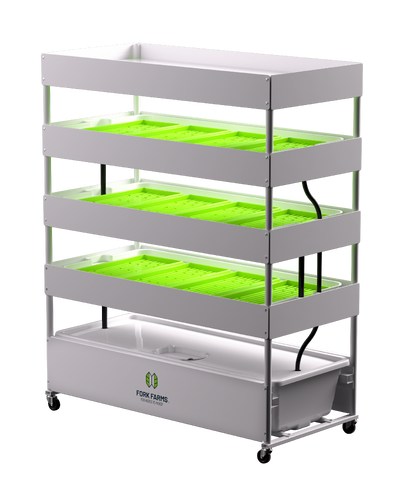
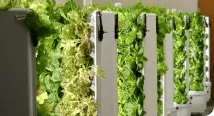
Fork Farms was there to be part of this fantastic event. We spent both days exhibiting with the Flex Farm , meeting attendees, showing off our hydroponics technology, and hearing what's on people's minds heading into next season.
.jpeg?width=5712&height=4284&name=IMG_1057%20(1).jpeg)
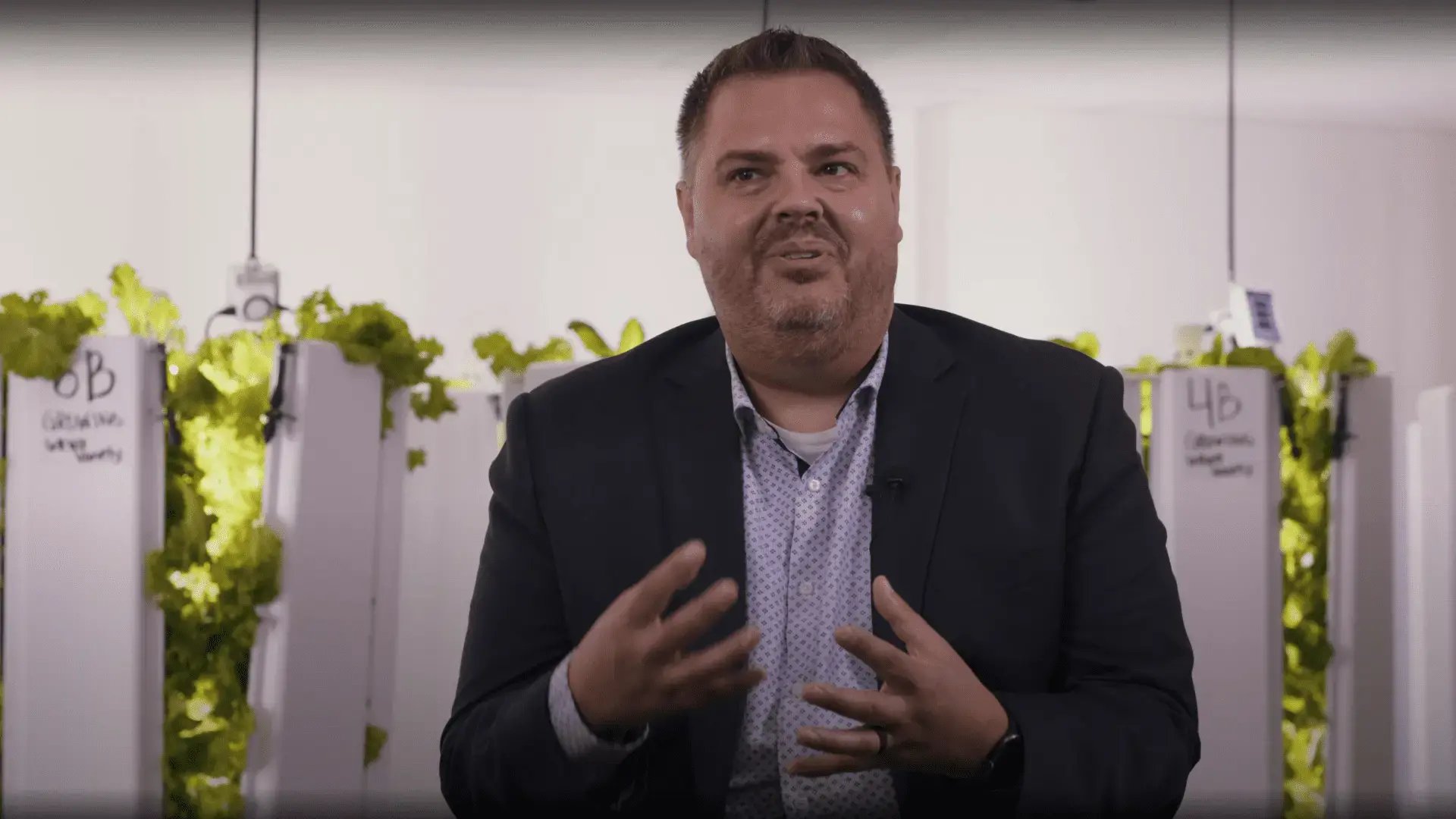
Fork Farms Founder and CEO, Alex Tyink, joined a special presentation called, "Strengthening the Workforce Ecosystem," alongside Paul Brentlinger (CEO, CropKing), Lillian Chapman (Development Manager, Agriculture Future of America), Ekene Tharpe (Department Chair, Horticulture, Reynolds Community College), and Tiffany Wood Mahler (K-12 Outreach and Engagement Coordinator, Virginia Tech's Virginia Seafood ARC). This panel covered growers, educators, and the Extension programs that connect the two. This was exactly the mix of experts a conversation like this needs.
The discussion centered on a challenge that keeps growing right alongside the CEA industry itself, which is how do we build a strong, skilled workforce ready to support the future of food production?
Alex Tyink’s take? We may be starting the conversation too late!
The workforce pipeline starts in the classroom
Much of the discussion around agricultural workforce development focuses on certificate programs, two-year degrees and other pathways designed to prepare young adults for careers. Those programs matter, and the people building them deserve real credit.
However, by the time a student is choosing a program, they've likely already decided whether agriculture, or growing food, is something they can see themselves doing. That decision tends to happen years earlier, often around middle school, and none of us are in the room when it does. So, this means that when the industry talks about a talent shortage, part of what we really mean is that we're competing over a pool of people we never helped create in the first place.
"The people who will feed this country in 2050 are in classrooms right now, and most of them have never been told that it could be them," Alex said.
Building the future CEA workforce is about giving young people a chance to experience growing food long before they ever have to choose a career.
Job-ready skills start with hands-on experience
When growers talk about what they actually need from employees, the most important qualities are rarely the technical ones. They need people who are consistent, who pay attention, who notice when something looks different, and who can troubleshoot a problem and know when to ask for help.
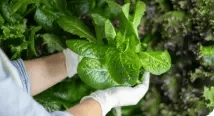
Those skills are hard to learn from a presentation or a textbook since they develop through responsibility and real experience. Give a student something living to care for, and suddenly consistency and real observation and problem solving matter. If a student forgets to check the water or PH, or misses a plant that is struggling, they see the consequences and then figure out what to do differently next time. This is learning in action. None of that requires a horticulture department. It just requires one classroom willing to take on something alive.
That's a big part of why we, at Fork Farms, believe so strongly in bringing food production into schools. A growing system can support science, nutrition, sustainability and food access today, while quietly introducing students to skills they may carry with them long after the harvest.
.jpeg?width=4032&height=3024&name=IMG_1077%20(1).jpeg)
Meet educators where they are
For industry partners interested in supporting workforce development, Alex challenged the group to think differently about what schools actually need.
A teacher may believe deeply in introducing students to agriculture careers, but belief alone rarely justifies a new program or expense. Schools have standards to meet, budgets to defend, and students to serve right now. Instead of asking educators to invest in something that might pay off down the road, industry can help provide tools and experiences that are useful in the classroom today.
When growing food helps a teacher bring science to life, supports a school nutrition program, creates a student club, or gives families a reason to show up for family night, the immediate value is obvious.
You don't have to build a workforce program to make a difference
Another important takeaway from this discussion panel was the fact that workforce development doesn't have to mean launching something large or formal.
Small actions matter such as hosting one student tour, answering the email from a teacher who found your website and wasn't sure anyone would write back, and talking to a class about what you actually do all day. Help a group of students troubleshoot a crop that failed, and let them sit with that failure for a minute. This is often the part that has the biggest real-life impact and teaches the most.
Alex also pointed to Extension as an under-credited connector between industry and education. Extension professionals already hold trust with both schools and growers at the same time, which almost nobody else does. Rather than industry building relationships one school at a time and wondering why nothing scales, there's a real opportunity to work alongside the people who were already doing the connecting.
Building a pipeline also means giving people a reason to stay
Recruiting people into CEA is only half the equation.
If an entry-level employee can't see where the job leads next, even the strongest pipeline eventually breaks down and no amount of upstream recruiting can fix this. The industry has a responsibility to think just as hard about retention and career pathways as it does about outreach. We need to be thinking about what opportunity actually looks like three, five, or 10 years after someone enters the field.
A healthy workforce ecosystem needs to introduce more people to the possibilities within agriculture, and create an industry where they can actually build a future once they're in it.
Growing what's next
CEA Summit East gave us a chance to connect with people tackling these questions from every angle. We met growers, equipment providers, educators, researchers, and workforce development leaders alike, and we were encouraged by the many opportunities to work together.
At Fork Farms, we see what happens when growing food becomes something students can touch, manage, troubleshoot, harvest and eat. Our hydroponic growing systems make agriculture tangible. And, we like to think it helps a young person see a possibility they hadn't considered before.
Building the next generation of growers won't happen overnight, but we can start by giving this generation something to grow.
It was a great two days. Thanks to Indoor Ag-Con, the CEA Innovation Center, Virginia Tech, and IALR for putting it together, and to everyone who stopped by our booth to watch the growing technology with their own eyes. If you were part of that workforce conversation or if you're doing this work in your own school, greenhouse, or classroom and weren't in the room, we'd genuinely like to hear from you. We’re here to help you grow in every way!
Important Links: